

The dinner table is a daily point of convergence – a site of routine practice, yet also a setting for some of our most meaningful interactions with close companions. Food plays a role in a wide range of social interactions—whether with app-based food couriers or through shared meals with spouses, whether in practical terms or as expressions of our values and beliefs. When closely examined, these food-related encounters offer a window into broader questions of sociability, economy, multiculturalism, politics, migration, heritagisation, and the questions on the Anthropocene.
The goal of the 25th Conference of the SIEF Food Research Group, “Food Encounters: Emplacement and Ethics in Everyday Life”, is to shed light on two types of food encounters:
- Commensal spaces show how food can foster conviviality and bridge class and cultural divides, particularly in urban settings. The growing concept of conviviality emphasises everyday, place-based interactions through which people from diverse backgrounds find common ground. Restaurants, bars, bakeries, farmers’ markets, and even doorsteps are everyday spaces where these interactions take place.
- Food is more than sustenance; it is a site of ideological negotiation that reflects tensions between tradition and change, identity and aspiration, and consumption and sustainability. Food-related choices are shaped by debates over dietary ethics, heritage, branding, and sustainable practices, influencing place-making, identity-building, diplomacy, and social change. The conference will also explore historical and contemporary perspectives that show how the politics of food operate across time and place.
The 25th SIEF Conference will take place between 15th and 18th September 2026 at the ZRC SAZU premises in Ljubljana, Slovenia. English will be the working language of the conference, and will take place entirely in person. All questions can be sent to sief-food2026@zrc-sazu.si.
Keynote Speakers
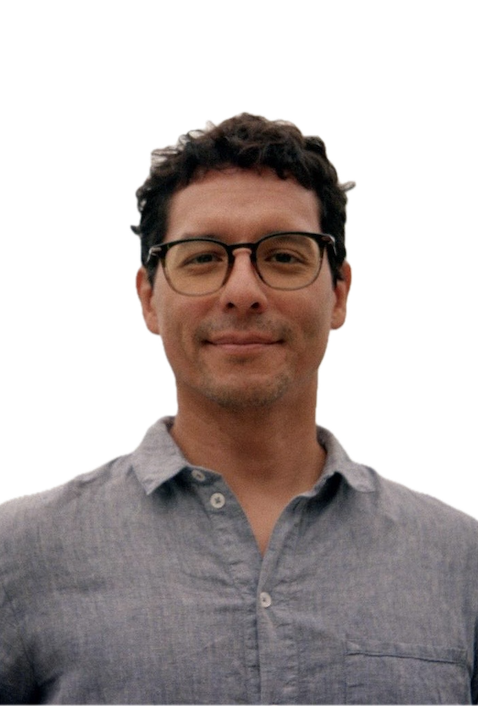
Raúl Matta
Raúl Matta is a full researcher at the Institute Lyfe Research and Innovation Center and research associate at the Institut de Recherche pour le Développement (IRD), both in France. Previously he has worked at the Freie Universität Berlin, the IRD, and the University of Göttingen. Between 2021 and 2022, he was a Marie Skłodowska Curie/FIAS Fellow at the Paris Institute for Advanced Study. His work lies at the intersection of anthropology, food, and heritage studies, examining how diverse actors ascribe multiple meanings and purposes to food. Raul has conducted fieldwork in Peru, Mexico, Germany, and France and held leading positions in several international research projects, most recently the EC Horizon–funded CONVIVIUM. He is the author of From the Plate to Gastro-Politics (Palgrave, 2023) and co-editor of The Routledge Handbook of Food and Cultural Heritage (2025)

His plenary talk is titled Shaping Inclusive Foodscapes through Convivial Activations
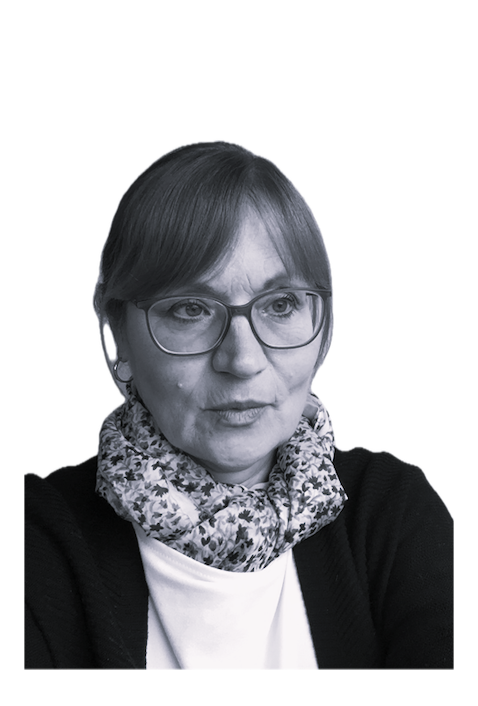
Maja Godina Golija
Maja Godina Golija is a Scientific Councillor at the Research Centre of the Slovenian Academy of Sciences and Arts (ZRC SAZU) and Full Professor of Ethnology at the University of Maribor. She is the author of several books and numerous scholarly articles on Slovenian food culture, the economy, urban life, and everyday life. She has participated in numerous research projects concerning the everyday life of Slovenians in the nineteenth and twentieth centuries and the cultural heritage of Slovenia. From 2003 to 2010, she served as a member of the Presidency of the International Commission for Research into European Food History (ICREFH), and from 2016 to 2023, she was Vice-President of the Food Research Working Group of the Société Internationale d’Ethnologie et de Folklore (SIEF).
Her plenary talk is titled The Slovenian Dining Table – A Space of Encounter, Acquaintance, and Social Interaction.

James Farrer
James Farrer is Professor of Sociology and Global Studies at Sophia University in Tokyo. He has conducted ethnographic studies of sexuality, nightlife, expatriate communities, and urban food cultures in China and Japan. He is a frequent contributor to media programming on urban life in Asia, including NHK World’s “Dive in Tokyo.” His recent publications include The Global Japanese Restaurant: Mobilities, Imaginaries and Politics (with David Wank), Globalization and Asian Cuisines: Transnational Networks and Contact Zones, and Shanghai Nightscapes: A Nocturnal Biography of a Global City (with Andrew Field). Currently, he is conducting comparative research on migrant-run restaurants in Japan and Germany.
His plenary talk is titled Rethinking the Urban Third Place in the Age of Migration: Urban Eateries as Places of Care and Conviviality.